A Society Made by the Forts
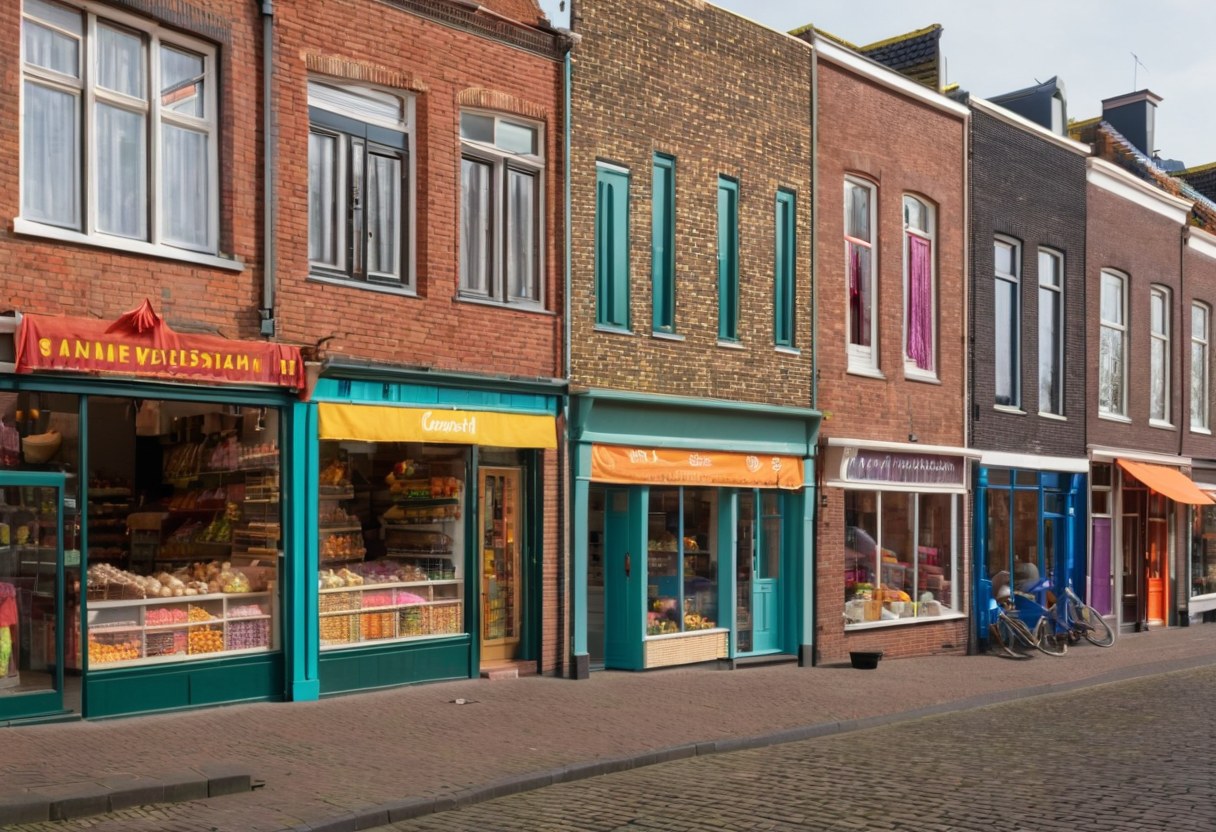
European men came to the Gold Coast without European women. Company service was a posting of a few years for those who survived it, and the mortality was appalling. In these conditions relationships between Dutch officials and traders and local Akan women were not exceptional but normal, and over generations they produced a distinct Euro-African population concentrated in the towns beside the forts, above all at Elmina.
These families carried Dutch surnames — Vroom, Bartels, Nieser, Ulzen and many more — spoke Fante and often Dutch, and were, in the fullest sense, of the coast. They were not a European enclave and not simply an African community. They were the people who made the meeting of the two possible.
What They Actually Did
Their functions were indispensable and mostly invisible in the formal record of treaties and dispatches.
- Brokerage. Inland trade was conducted by Asante and other African merchants who dealt with someone they knew and trusted. Euro-African brokers were that someone.
- Interpretation. Negotiations with Kumasi and with coastal states passed through interpreters whose reading of a phrase could decide an agreement.
- Independent trade. As company monopoly weakened, Euro-African merchants operated on their own account, some on a considerable scale, owning vessels, warehouses and credit networks.
- Administration. They served as clerks, book-keepers, garrison officers and, in the later period, in senior positions in the colonial service.
- Local standing. Through their mothers' lineages they held positions in Elmina's own institutions, including its asafo companies and stools.
Education and the Dutch Connection
Elmina had schooling in Dutch attached to the establishment, and prosperous families sent sons to the Netherlands to be educated — some for a few years, some for a full professional training. Those who returned came back with European qualifications, European contacts and a facility in Dutch that made them extremely useful, and extremely difficult to replace.
This was a genuine channel of exchange running in both directions, and it began early: Jacobus Capitein, taken from the Gold Coast as a child and educated at Leiden, was the most celebrated example, though his circumstances were unusual. For most, the Netherlands was an education rather than a destination; the point of going was to come back better placed.
Between Two Societies
Their position was powerful and precarious at once. The Dutch establishment depended on them but never regarded them as fully Dutch; their standing within Elmina rested on kinship, wealth and office rather than on any inherited right, and could be contested. They were routinely suspected by Europeans of favouring African interests and by Africans of favouring European ones — which is to say, they were correctly identified as having interests of their own.
Those interests were commercial and dynastic. Euro-African families were building estates and networks that they intended to pass on, and they positioned themselves accordingly: sometimes as loyal servants of the company, sometimes as its competitors, and in the political crises of the coast sometimes on one side and sometimes on the other.
1872 and After
The transfer of Elmina to Britain in 1872 struck directly at this world. The Dutch language, Dutch education and Dutch official careers ceased to be assets overnight; a Dutch surname no longer opened doors. Some families adapted, moved into British colonial employment and remained prominent well into the twentieth century, and members of the Vroom family in particular held significant positions in the later Gold Coast administration.
Others declined with the connection that had made them. But the names did not disappear. Dutch-derived surnames remain common in Elmina and along the Ghanaian coast today, and they are among the most durable traces of the Dutch centuries — more so than most of the forts.
Why They Deserve Attention
Histories of the Gold Coast tend to be written as encounters between two blocs: Europeans and Africans, the fort and the town. The Euro-African families make that framing impossible to sustain. They demonstrate that the Dutch presence was not a wall but a membrane, and that the people who lived inside it were neither colonised subjects nor colonial agents but something the categories of the period were never designed to describe.